A reading journal can be as simple as a list of titles in a notebook or as creative as a fully decorated bullet-journal spread. What matters most is that it's easy enough to keep up with. A journal that's 80% filled in with quick notes beats a beautiful one you abandon in February.
Why keep a reading journal?
- You'll remember more. Writing a few lines about each book helps it stick.
- You'll spot patterns. Which genres you rate highest, which authors you always love, what time of year you read most.
- You'll pick better next books. Knowing what you loved makes your TBR sharper.
- It's satisfying. Filling in a page or coloring a book spine after you finish is a small celebration.
Step 1: Choose your format
You have three main options:
- A blank notebook gives you total freedom, but you'll need to draw your own layouts.
- A printable journal gives you ready-made pages you can print as many times as you like and keep in a binder or disc-bound notebook.
- An app or spreadsheet is fast and searchable but less cozy.
Many readers combine them: an app for quick logging and a paper journal for reviews and yearly overviews.
Step 2: Decide what to track
Start small. You can always add more later. These are the most useful pages, roughly in order:
- A book log. Title, author, date finished, format and a rating. This is the backbone of any reading journal.
- Yearly goals. How many books, genres to try, authors to catch up on.
- A TBR list. Books you want to read next, with who recommended them.
- Book reviews. Short reflections on favorite (or least favorite) reads.
- A visual tracker, like a bookshelf you color in, one spine per book.
Page ideas once you're hooked
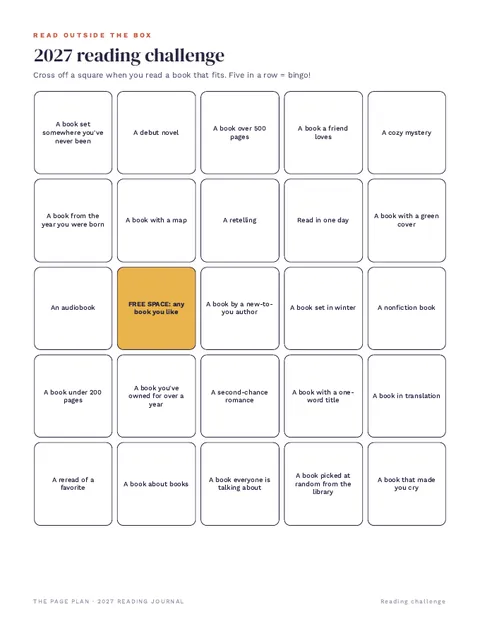
- Reading challenge or bingo card to push you toward new genres. Our reading challenge generator can make one for you.
- Series tracker so you remember where you left off.
- Favorite quotes and lines that stayed with you.
- Genre tracker to see what you really read most.
- Book budget and library loans to keep spending and due dates in check.
- Wishlist for special editions or books to ask for as gifts.
- Year in review: favorite book, biggest surprise, best character, most-read month.
Step 3: Use simple review prompts
Blank pages are intimidating. Prompts make reviews quick. Pick three or four:
- What was it about, in one or two sentences (no spoilers)?
- How did it make me feel?
- Favorite character and why.
- Tropes or themes I noticed.
- A quote I want to remember.
- Would I recommend it, and to whom?
Step 4: Make it a habit
The easiest rule: log the book the day you finish it. Keep your journal next to where you read, or keep a pen tucked inside the cover. Once a month, spend ten minutes updating your trackers and looking at what you read. That monthly check-in is also a great moment to plan the next month's reads.
Step 5: Decorate (only if it's fun)
Washi tape, stickers, colored pens and printed book covers can make a journal feel special. But decoration is optional. If it starts to feel like homework, skip it. A plain, honest record of your reading life is still a treasure to look back on.
Want a ready-made reading journal?
We made the 2027 Reading Journal for exactly this: 26 printable pages including goals, a 52-book bookshelf, twelve monthly logs, a book review page, a TBR list, a reading challenge bingo, a series tracker, quotes, a book budget, library loans, a wishlist, a genre tracker and a year-in-books page. Print only the pages you need, as many times as you like.
Your end-of-year ritual
The best moment in any reading journal is December, when you get to look back. Set aside an evening with a warm drink and flip through the whole year. A few questions make it easy:
- What was my favorite book of the year, and why did it stay with me?
- Which book surprised me most?
- Which genre did I read most, and which did I barely touch?
- What was my busiest reading month, and what was going on in my life then?
- Which authors do I want to read more of next year?
Write your answers on a "year in books" page, then use them to set next year's goals. Your journal stops being just a record and becomes a guide to reading more of what you love.
Common mistakes to avoid
- Tracking too much at once. Start with a log and a TBR; add pages later.
- Waiting for the "perfect" start date. Start today, with the book you're reading now.
- Writing long reviews for everything. A rating and one sentence is plenty for most books.
- Giving up after missing a few books. Just log what you remember and carry on.
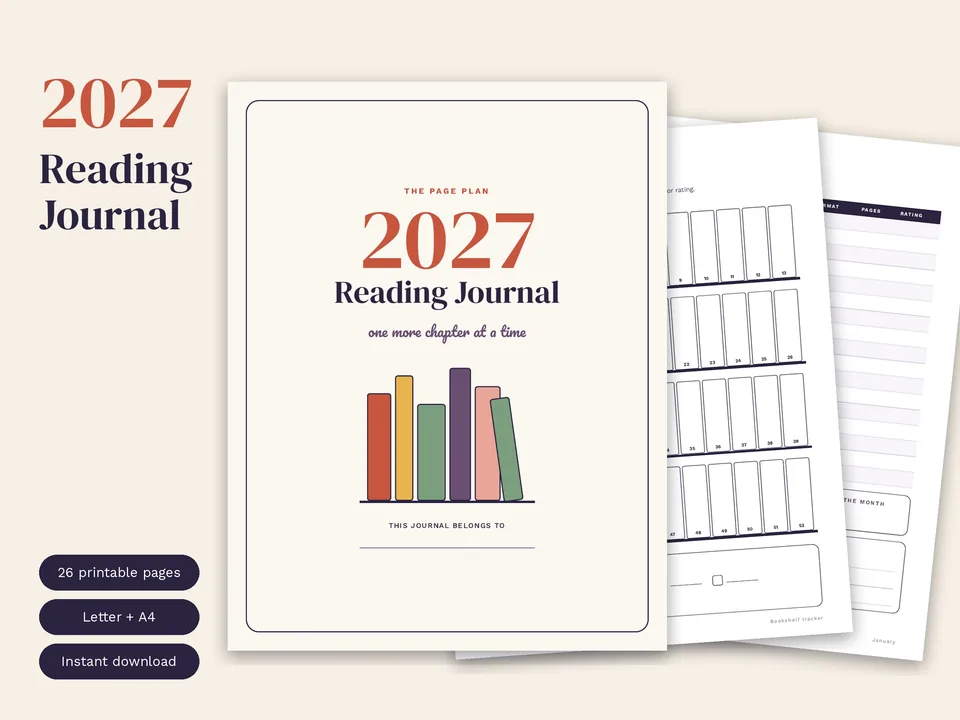
Track every book of 2027.
Our printable 2027 Reading Journal has goals, a 52-book bookshelf, monthly logs, reviews, a TBR list and a reading challenge. 26 pages, print at home.
Turn a yearly book goal into books per month and pages per day.
Our free reading goal tool works it out in seconds. No sign-up.
Open the reading goal toolQuestions people ask
What should I write in a reading journal?
At minimum, the title, author, date finished and a rating. Add a sentence or two about how the book made you feel, a favorite quote or character, and whether you'd recommend it.
Is a printable reading journal better than a notebook?
A printable journal saves you from drawing layouts, and you can print extra copies of the pages you use most. A blank notebook is better if you love designing your own spreads.
When should I start a reading journal?
Any time. January is popular, but the best time is with the book you're reading right now.