How to read more and spend less
- Use your library card. Many libraries lend ebooks and audiobooks through apps like Libby or Hoopla, depending on where you live.
- Place holds early. For popular new releases, join the waitlist the week you hear about a book.
- Buy the ones you'll reread. Save hardcover money for favorites and borrow the rest.
- Try used bookshops and swaps. Little free libraries and book swaps are great for trying new authors.
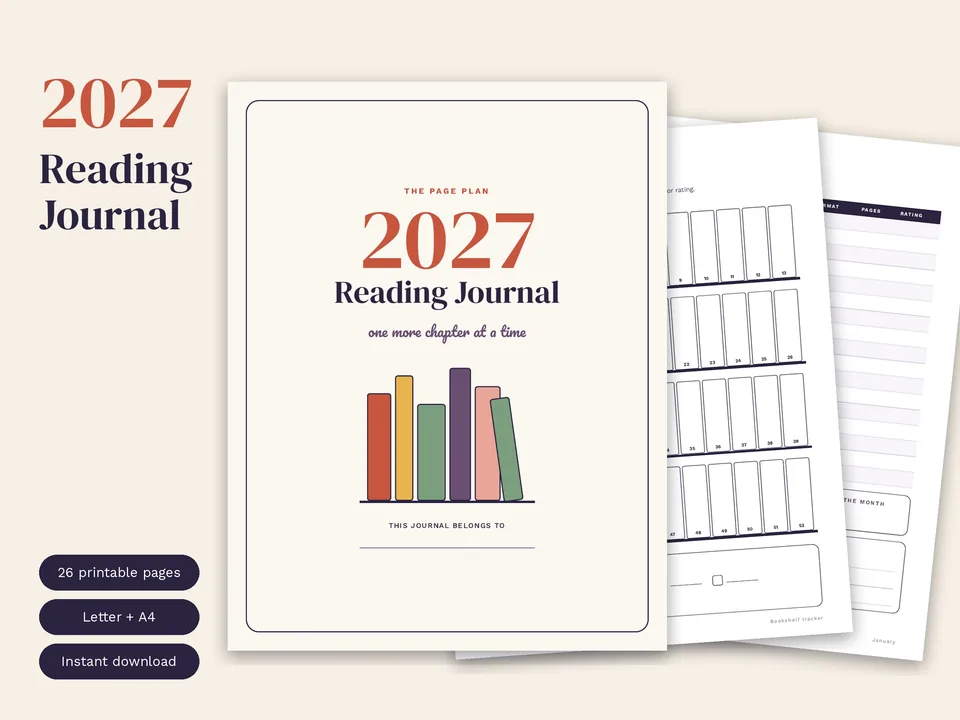
- Set a monthly book budget and track it. The 2027 Reading Journal has a book budget page and a library loans tracker.
Want to see where books fit alongside rent, groceries and savings? The Steady Sums budget calculator helps you plan your whole budget.
Related reading
Questions people ask
How much does the average reader spend on books?
It depends entirely on format and habits. A reader buying two paperbacks a month spends a few hundred dollars a year, while someone buying new hardcovers weekly can spend well over a thousand.
Is an ebook or audiobook subscription worth it?
Compare the monthly fee to how many books you'd actually buy in that format. If you'd buy fewer than one book a month, borrowing from the library or buying individually may cost less.
Does the library really save that much?
For many readers, yes. Every book you borrow instead of buying is money saved, and library apps make borrowing ebooks and audiobooks easy.